Best Prices on Outboard Motors
Make informed purchases by choosing an certified Canadian outboard dealer that validates proper credentials, manufacturer approval, and industry experience. Search for original equipment parts in stock, professionally trained technicians, complete maintenance and pre-delivery inspection, and verified serial number warranty. Ask for sea-trials with RPM targets, correct shaft and prop installation, and itemized quotes separating engine, rigging, installation, and additional fees. Check parts supply and warranty repair completion period throughout Canada. Stay clear of grey‑market imports and maintain appropriate horsepower specifications for your hull. Moving forward, you'll learn about how to compare brands, financing options, and promotional timing.
Essential Points
- Check manufacturer credentials and proper Canadian certifications, along with years in business; verify factory-trained and qualified professionals and cross-country original equipment parts network.
- Ask for the written warranty associated with the engine serial number, along with dealer authentication and a complete pre-delivery inspection report showing software updates and sea-trial outcomes.
- Review Canadian customer feedback regarding delivery timeliness, communication quality, quality of after-sales support, and response time for warranty claims.
- Secure detailed pricing breakdowns breaking down every cost from engine and rigging to installation, PDI, documentation, taxes, and associated fees; remember to steer clear of grey‑market imports without official Canadian warranty.
- Ensure correct setup and dimensions: match engine horsepower and shaft length to boat hull, check propeller compatibility, and validate sea-trial RPM and performance with normal cargo.
Evaluating Trustworthy Outboard Dealers in Canada
Although cost may be appealing, start by validating the vendor's reliability and qualifications. Check for proper licensing, manufacturer authorization, and years of experience. Review feedback from buyers in Canada to confirm reliable service quality, punctual delivery, and clear communication. Request comprehensive service records for display units and demos; reliable sellers document all maintenance work, system upgrades, and guarantee work.
Confirm stock availability so you won't being stuck delayed in peak season. A trustworthy dealer delivers accurate ETAs, written quotes, and detailed allocations. Review return terms and exchange periods in writing, covering restocking fees and shipping responsibility. Evaluate spare parts availability, certified technicians, and completion schedules for warranty repairs. Look for detailed pre-delivery inspections, serial-numbered invoices, and registered warranties. Pick the dealer who demonstrates reliability before, during, and after the sale.
How to Pair Engine Specifications with Your Boating Preferences
Once you've checked out the dealer, make sure to select a motor that suits how and where you'll be boating in Canada. Start by examining your hull specifications, capacity plate, here and usual cargo. If you frequently trailer or access remote lakes, prioritize portable 2.5-9.9 hp four-strokes for better mobility. For peaceful cottage lake cruising, select midrange 25-60 hp EFI four-strokes including sound-dampening and user-friendly trolling idle control. When navigating big waters with passengers and gear, choose 75-150 hp to achieve quick planing and hold consistent velocity in choppy conditions.
Choose a suitable shaft length according to the transom height (comes in short, long, or extra-long) and select the right gear ratio and prop pitch based on weight and elevation requirements. Make sure to evaluate features like electric start, power trim/tilt, and the alternator output for proper electronic system operation without excessive idling.
Evaluating Major Companies for Performance, Quality, and Coverage
You should analyze each manufacturer's proven reliability metrics-such as breakdown frequency, service requirements, and user reviews-to determine the best option. Next review warranty terms and coverage scope thoroughly to evaluate which manufacturers provide the best protection for parts, labor, and corrosion. Armed with information on reliability and warranty coverage, you can choose a motor that reduces maintenance costs and operation interruptions.
Verified Performance Statistics
When reliability is non‑negotiable, objective metrics separate Canada's top outboard brands. Be sure to evaluate operational longevity data, reliability metrics, and cold condition startup rates. Seek out engines that deliver consistent performance under stress, notably in the cold environments found on northern waterways. Precision fuel injection matters: proper fuel atomization optimizes combustion, prevents buildup, and maintains consistent performance across seasons.
Examine rust protection with documented salt‑spray testing and review seal condition after prolonged operation periods. Baseline noise and vibration measurements at normal operating RPM indicate build quality and alignment. Data‑logged service intervals reveal how frequently critical parts need attention. Finally, verify replacement part supply and service documentation-brands that share fault codes and test procedures make upkeep predictable, safeguarding your boating experience.
Warranty Term Comparisons
Although reliability statistics reveal some insights, warranty duration demonstrates how firmly each manufacturer stands behind its technology. When evaluating warranty periods, consider more than headline figures. Check protection tiers for powerhead, corrosion, electronics, and labor. Some brands offer five-year complete protection with corrosion safeguards, while others separate the terms-three years full coverage followed by limited parts protection.
Examine claim handling procedures, too. It's important to have nationwide dealer authorization, rapid fault assessment, and accessible parts across Canada's maritime and interior locations. Clear maintenance specifications matter; overlooked services can void warranty. Ask whether business or rental applications affects warranty conditions, and if warranty transferability enhances resale potential.
Ultimately, align warranty terms to usage hours. Heavy-use fishermen may gain value with premium protection packages, while occasional boaters find security with basic comprehensive coverage.
Authorized Service, Certification, and Dealer Network Information
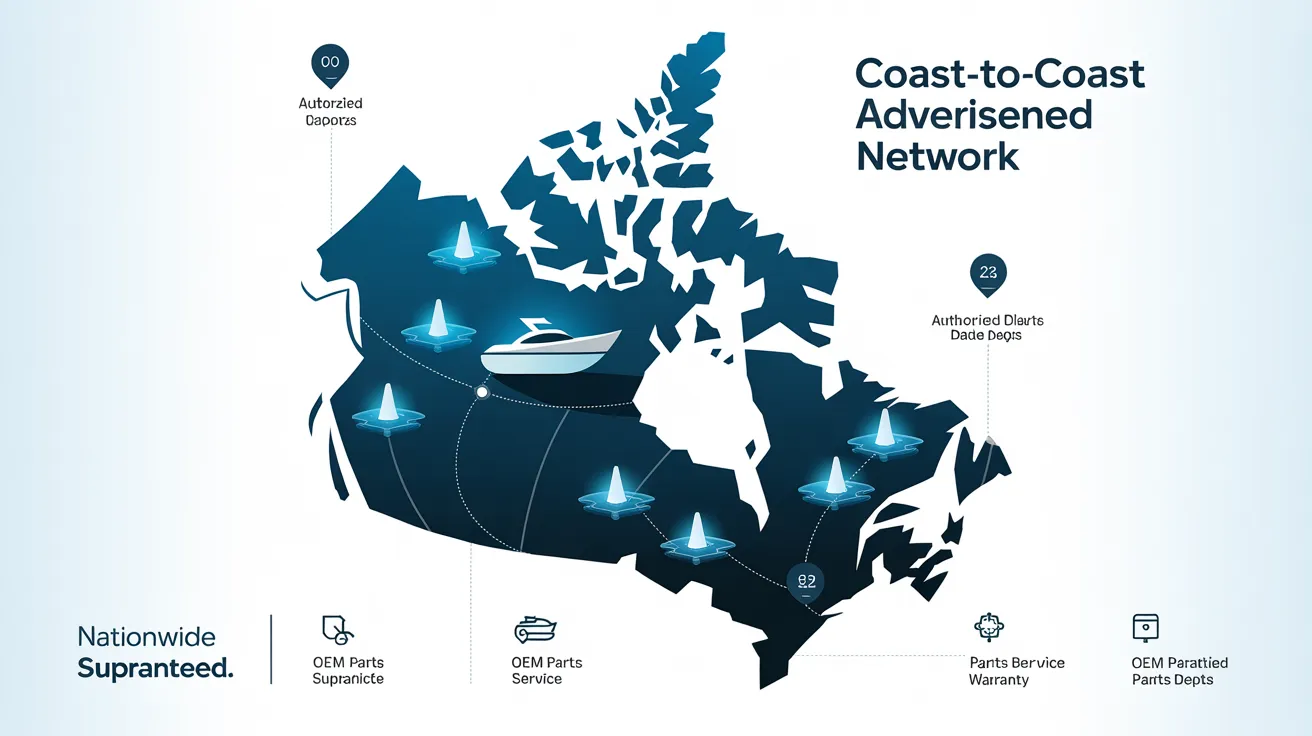
Before comparing horsepower or hull specifications, ensure you prioritize certification, dealer networks, and authorized service to safeguard your investment and warranty. You need a motor backed by factory-trained, certified technicians and a coast-to-coast Canadian dealer network that maintains OEM parts and follows brand service protocols. Be sure to confirm the dealer's status with the manufacturer and obtain written warranty verification associated with the engine serial number.
Select companies with uniform diagnostic equipment, digital service history, and clear maintenance schedules allowing you to receive maintenance at any facility without losing coverage. Request information on pre-delivery inspection protocols, software upgrades, and post-install sea-trial processes. Assess parts accessibility, turnaround times, and mobile service for outlying facilities. When you purchase through an certified retailer, you ensure correct setup, verifiable maintenance history, and faster resolutions if problems occur.
Financing Solutions, Pricing Clarity, and Seasonal Offers
Once you have authorization secured, concentrate on the financial specifics. Ask for detailed quotes from dealers that separate the engine's list price, rigging, system controls, propeller, installation, PDI, shipping, and documentation. Double-check taxes and environmental fees up front. Transparent costs allow you assess various options by power output, features, and warranty protection free from delivery surprises.
When looking to maintain liquidity, consider using flexible financing options through factory programs and dealer networks. Search for favorable APRs, straightforward terms, and absence of early payment charges; confirm about including extended protection with the loan. Schedule your acquisition around seasonal promotions and production facility deals-cash back, store credit, or bundled accessories often emerge in late winter and early spring. Secure your preferred model early, then secure the discount with formal paperwork covering down payment and schedule details.
Smart Shopping Tips and Pitfalls to Avoid in Canadian Waters
Protect your investment by avoiding grey‑market imports that don't have Canadian warranty support and proper documentation. Make certain to match horsepower to your hull's specifications and usual load for consistent performance without straining the transom. We'll explain the way to confirm authorized suppliers and pick the optimal power range for Canadian waters.
Steer Clear of Grey-Market Products
While bargain listings can appear tempting, non-authorized marine motors often end up costing more over time. Unauthorized imports often bypass Canadian safety requirements, emission regulations, and dealer setup, leading to integration challenges with domestic fuel standards, mounting systems, and diagnostic tools. You risk warranty coverage gaps as manufacturers usually honor warranties exclusively via official Canadian channels. Spare parts can be difficult to obtain, system updates could be blocked, and recall support remains questionable.
Safeguard your investment by checking the model's Canadian SKU, serial number, and production year with an official dealer. Request a written manufacturer warranty, PDI checklist, and proof of Canadian compliance documentation. Confirm that the ECU is configured for Canada and that service documentation begins at a qualified dealer. When in doubt, walk away and buy through the authorized network.
Select Appropriate Hull Power
Prior to choosing engine power, match the engine to your hull's specifications including mass, hull angle, and planned cargo for efficient planing and safe handling. Make sure to verify the builder's capacity plate and stay within the suggested limits; insufficient power causes slow takeoff, while too much horsepower puts stress on the transom and voids warranties. In rough Canadian waters, power delivery matters as much as top-end performance.
Ensure proper shaft length for transom height for keeping the anti-ventilation plate near the boat's keel. Improper alignment results in steering problems, excess spray, and cavitation. Match engine power with propeller specifications-pitch and diameter matched to achieve proper RPM with normal load. Run trials with standard fuel load, crew, and gear. Choose EFI four-stroke engines featuring corrosion protection, and insist on comprehensive sea-trials plus proper rigging documentation.
Frequently Asked Questions
How Provincial Taxes and Fees Influence Outboard Motor Price Tags?
Provincial taxes and fees impact your final outboard motor expense by incorporating required taxes and environmental charges to the base MSRP. You're responsible for applicable provincial and federal taxes, plus additional charges for documentation, recycling, and component disposal. Some regions apply extra costs for high-end accessories and waste management. It's recommended to request an comprehensive estimate, confirm that destination and PDI charges aren't duplicated, and investigate qualifying discounts to reduce your overall investment with full disclosure.
What Documents Are Needed for New Outboard Registration in Canada?
Much like organizing a toolbox, certain paperwork is required when registering a new outboard in Canada. You're required to present proof of ownership (including sales documentation), government identification, engine serial number, and original manufacturer paperwork. To register the title, include watercraft specifications and evidence of Canadian residency. If the purchase is financed, include lien documentation. Complete the official registration forms, provide necessary signatures, and save digital documentation. This will streamline approvals, protect resale value, and maintain legal compliance from day one.
What Happens to the Warranty if I Sell My Boat or Motor?
You can usually transfer the warranty on your boat or motor, but it varies based on the specific manufacturer and how it's registered. To confirm the warranty can be transferred, get in touch with the dealer or manufacturer prior to sale, confirm the transfer costs, and fill out all required forms. It's necessary to have ownership papers, the original purchase invoice, serial numbers, and maintenance records. Be sure to register the transfer within the designated window to maintain continuous coverage. Update service history regularly to maintain warranty validity and resale value.
How Do Outboards Handle Cold-Start Winter Conditions?
You'll get reliable starts if you prep correctly. For cold weather operation, you should use EFI or enriched choke, a fully charged battery, and clean fuel. Optimize battery efficiency by keeping terminals clean and tight, selecting the appropriate cold cranking amps, and keeping the battery warm if you can. Prime the fuel bulb, engage the key to prime the system, then start in brief intervals. Choose appropriate seasonal fuel, proper marine-grade oil, and maintain idle for stabilization before increasing speed.
Are There Insurance Implications for Specific Horsepower or Modifications?
Insurers commonly calculate policy rates and qualification based on horsepower and modifications. When you go beyond insurance coverage limits or make performance upgrades, you'll require special coverage endorsements for proper protection. Make sure to report precise engine power, engine tuning, propeller changes, or lift plate additions. Insurance providers may require documentation, pictures, and surveys, then modify deductibles or navigation restrictions. You can safeguard warranties and claims, always document installations, comply with manufacturer requirements, and revise your coverage prior to sea trials or boat sale.
Summary
You've got the blueprint, start by evaluating suppliers, pairing horsepower to your marine environment, and evaluating brands for dependability. Be sure to require certified service, obtain transparent pricing, check financing options, and align purchases with Canadian seasonal deals. Avoid gray-market engines and ambiguous warranty terms. Follow these steps, and your new outboard will perform perfectly - comparable to a Swiss watch with Bluetooth. When you're set, gather written quotes, confirm serial registration, and schedule your first service. Follow this approach, and you'll launch with certainty and long-term value.